
Oral placement therapy
Sometimes your child knows exactly what they want to say, but their mouth won't cooperate yet. We help the jaw, lips and tongue learn the moves.
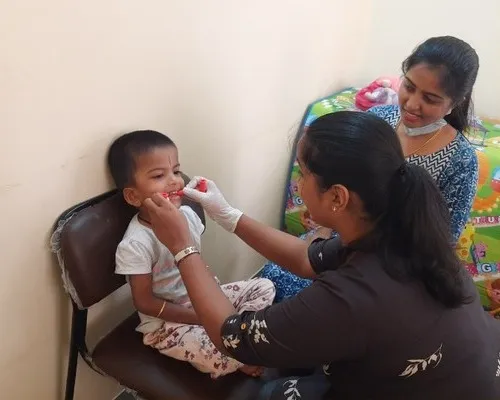
See what it looks like at Turtle Express
When it is often recommended
- Hard to understand, even when trying
- Mouth often hangs open
- Lots of drooling
- Can't copy mouth movements
- Hard to chew or bite
- Struggles with a straw or cup
How we work
We look at the mouth moving
We watch how the jaw, lips and tongue move during talking and eating, then agree on goals with you.
One movement at a time
Each step is practised until it is steady before we move on to the next.
Feel it, see it, hear it
Touch cues, mirrors and sounds often help a child sense what their mouth is doing.
Straws, horns and games
OPT often uses simple tools like these as play, with short practice at home.
More about oral placement therapy
What it works on
Oral placement therapy (OPT) builds strength and coordination in the jaw, lips, tongue and the soft back part of the roof of the mouth. It uses four kinds of feedback:
- Hearing the sound
- Seeing the movement
- Feeling touch cues around the mouth
- Sensing where the mouth parts are and how they move
These signs can have several causes, so an assessment tells us whether movement is part of the problem.
Part of a bigger plan
OPT is one part of a bigger plan. It is often blended with PROMPT, Hanen and AAC in speech therapy, and with chewing and drinking work in feeding therapy. The aim is real talking and easier eating, not exercises for their own sake. Our founder is certified in TalkTools OPT Levels 1 and 2 and TalkTools Feeding.
Who we see
Children with Down syndrome, apraxia, autism, low muscle tone, feeding difficulties and unclear speech. Sessions run at our centre. Ask us whether online sessions suit your child.
Questions parents ask
Is oral placement therapy the same as speech therapy?
No. It is one tool we use within speech and feeding therapy, not a replacement. It works on the movement side, while speech therapy also works on sounds, words and communication.
Which children does it help?
Mainly children whose speech or eating is affected by how the mouth muscles move, such as children with low muscle tone, Down syndrome or apraxia. After an assessment we will tell you if it fits your child.
Will I need to do exercises at home?
Usually, yes. Short, regular practice at home helps, and we show you what to do.
Every child is different. If this seems right for your child, please ask your therapist for more details.
Often helps children with
Pashyanti is really best for speech therapy. If ur kid s nonverbal thn u should approach her to listen words from ur kids mouth. She takes OPT, applies Hanen approach and prompts so that kids get maximum benefits.
Other ways we help
Wondering if this is right for your child?
Every child’s needs are different. Talk to us, and we’ll think it through with you.