
Childhood apraxia of speech
Your child knows what they want to say. The hard part is getting the mouth to do it. With the right kind of practice, speech can get clearer, one sound at a time.
See what it looks like at Turtle Express
Signs parents often notice
- Very little babbling as a baby
- Says a word, then can't again
- Same word sounds different each time
- Mouth searches for the sound
- Longer words fall apart
- Understands far more than says
- Gets frustrated trying to talk
How we can help
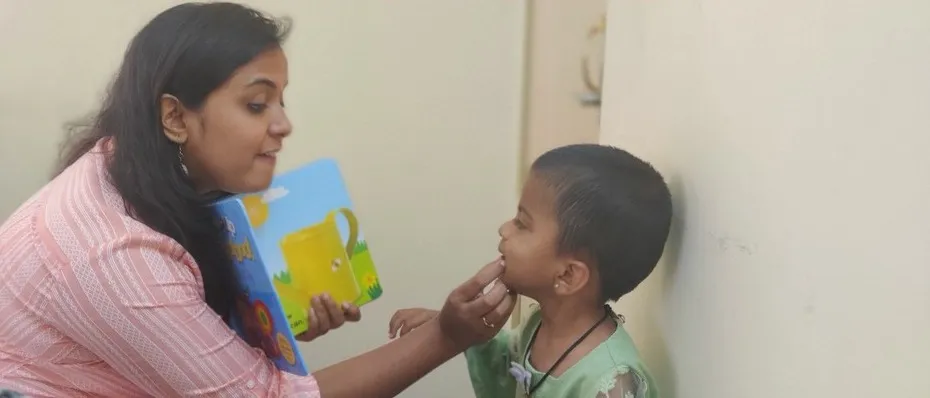
Touch cues with PROMPT
Gentle touch on the jaw, lips and face shows your child how to move for each sound.
Lots of practice
Children with apraxia need many tries of the same words, so frequent, playful practice helps.
A way to talk now
Signs or pictures help your child communicate today while speech is building.
Practice at home
We show you exactly what to practise and how, so your child gets more tries every day.
More about childhood apraxia of speech
What it is
Childhood apraxia of speech (CAS) is a speech motor disorder. The muscles are not weak. The brain finds it hard to plan and sequence the movements for speech. So a child may say a word clearly once and then not manage it again.
Apraxia can happen on its own, or alongside autism or other developmental needs.
What helps
Children with apraxia usually need frequent, focused practice of real words.
- PROMPT touch cues to guide movement
- Starting with simple sounds and building to longer words
- AAC (pictures, signs or a device) as a bridge, never a replacement
- Parents practising at home between sessions
Many parents come to us for apraxia. They often mention how our founder, Pashyanthi Nagendra, blends these methods and explains clearly why a child is stuck and what comes next. Read more about our speech therapy.
When to get help
If your child’s speech is very unclear, inconsistent or not moving forward with regular therapy, ask about apraxia. Talk to us, in person or online.
Questions parents ask
Who diagnoses apraxia of speech?
A speech-language pathologist, after watching your child speak over time. In very young children with few words it can be hard to be sure, so it may be called suspected apraxia at first and treated the same way.
Is apraxia the same as speech delay?
No. In a delay, speech develops in the usual order but slowly. In apraxia, the brain has trouble planning mouth movements, so it needs a different kind of therapy with lots of practice.
Can you help us online?
Yes. Families outside Bengaluru have worked with us online for apraxia. Ask us whether online sessions suit your child.
Every child is different. If this seems right for your child, please ask your therapist for more details.
Therapies that help
Worried about your child?
You don’t need a diagnosis to talk to us. Call or WhatsApp, and we’ll help you work out the next step.